WOSS
What Is the Agentic AI Foundation (AAIF)? The Open Standards Behind AI Agents
Aman Mundra · July 4, 2026 · 8 min read

Contents
- What is the Agentic AI Foundation?
- Which projects founded AAIF?
- What is agentgateway, the fourth project?
- Who actually governs AAIF?
- Why did the whole industry back it so fast?
- What does an open agent standard actually look like?
- How does this connect to the rest of cloud-native AI?
- Where is AAIF headed?
- Frequently asked
- What is the Agentic AI Foundation (AAIF)?
- How many projects does AAIF host?
- What are MCP, goose, AGENTS.md and agentgateway?
- Who runs AAIF?
- Do I need to be a member to contribute?
- Why does AAIF matter for developers and enterprises?
TL;DR - The Agentic AI Foundation (AAIF) is a Linux Foundation umbrella, formed in December 2025, that governs the open standards AI agents use to connect to tools and to each other. It was anchored by three donated projects - MCP (Anthropic), goose (Block), and AGENTS.md (OpenAI) - and joined in June 2026 by a fourth, agentgateway (Solo.io). It grew to ~180 member organizations within months, making it the fastest-growing project in Linux Foundation history. This is what it is, why it exists, and why it matters.
Updated July 2026 to cover agentgateway's arrival and AAIF's governance bodies.
For two years, every company built AI agents their own way. Every agent framework had its own way to call a tool, its own config format, its own idea of how two agents should talk. It was the browser wars, again - except for the entire agentic economy.
In December 2025, the industry did something unusual: it agreed on neutral ground.
What is the Agentic AI Foundation?
The Agentic AI Foundation (AAIF) is a foundation under the Linux Foundation that provides a neutral, vendor-independent home for the open standards of agentic AI. Its mission is to ensure that as AI shifts from passive chatbots to proactive agents, it does so on open, shared standards - avoiding the fragmentation and vendor lock-in that would otherwise fracture the ecosystem.
Rather than one company owning "how agents work," AAIF puts the core protocols under open governance: project maintainers and steering committees make the technical calls, and corporate members participate through transparent, defined processes. It's the same model that made Kubernetes and Linux neutral infrastructure everyone could trust.
Which projects founded AAIF?
Three donated projects anchored the foundation - each solving a different piece of the agent puzzle:
- MCP (Model Context Protocol) - donated by Anthropic. The universal standard for connecting AI models to tools, data, and applications. Think of it as the USB-C port for AI: one protocol, any tool.
- goose - donated by Block. An open-source, local-first AI agent framework (released early 2025) that combines language models, extensible tools, and MCP-based integration into a reliable environment for building and running agentic workflows.
- AGENTS.md - donated by OpenAI. A dead-simple, universal file that gives AI coding agents consistent, project-specific guidance so they behave reliably across different repositories and toolchains.
Together they cover how agents use tools, how agents run, and how agents understand a codebase.
What is agentgateway, the fourth project?
In June 2026, AAIF accepted its first new hosted project since launch: agentgateway, donated by Solo.io.
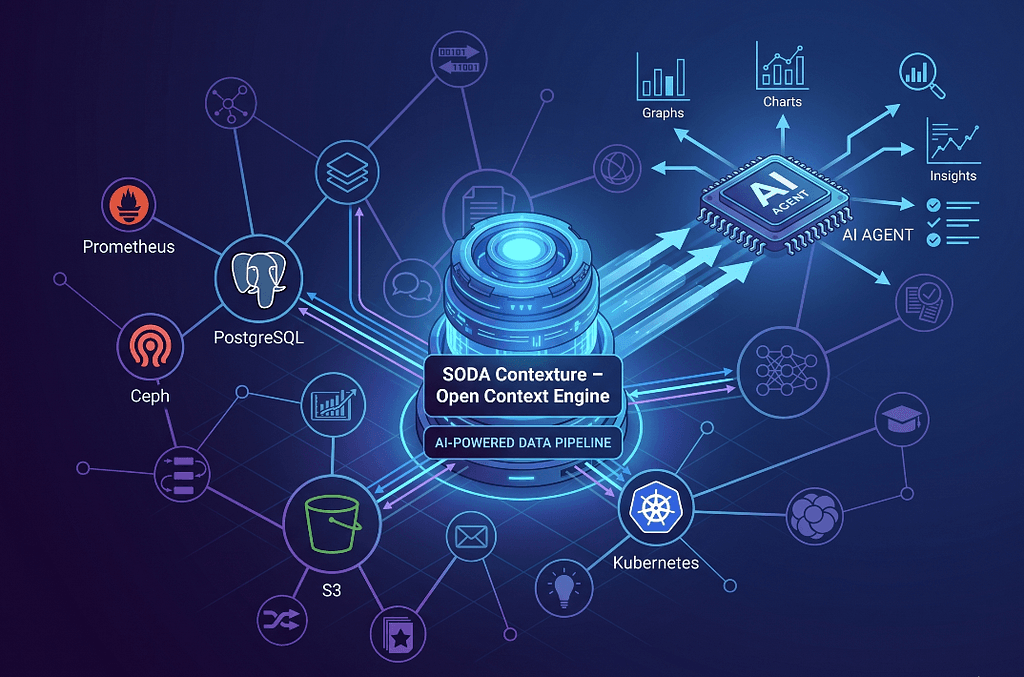
If the first three projects define how agents speak, agentgateway governs that speech in production. It's an open-source gateway written in Rust, providing a single operational layer for MCP tool calls, Agent-to-Agent messages, LLM inference, REST, and gRPC. It runs on bare metal, VMs, containers, and Kubernetes.
The problem it solves is one every team hits the moment agents leave the prototype stage: your existing infrastructure cannot see agent traffic. A normal API gateway has no concept of "which tool did this agent invoke," so you cannot rate limit it, attribute its cost, or write a policy against it. agentgateway adds MCP virtualization, model-agnostic LLM routing, tool-level access policies, prompt guards, budget controls, and tracing across the agent-to-tool-to-model path.
It arrived with a substantial community already attached: 300+ active contributors across 60+ organizations, including CoreWeave, Red Hat, Adobe, Salesforce, Amdocs, and Microsoft.
Who actually governs AAIF?
Two bodies, both established within the foundation's first quarter:
- Governing Board - nine members, chaired by David Nalley (AWS), with April Kyle Nassi (Google) as treasurer, plus representatives from OpenAI, Microsoft, Cloudflare, Anthropic, Bloomberg, and Block. Zhong Wu (Shopify) joined in January 2026 to represent Gold members.
- Technical Committee - chaired by David Soria Parra (Anthropic) and co-chaired by Caitie McCaffrey (Microsoft), with one representative per Platinum member. It defines the requirements for new projects joining the foundation and reviews proposals. Its biweekly meetings are recorded and open for anyone to attend and observe on the LFX platform.
Beneath them sit seven working groups: Identity and Trust, Accuracy and Reliability, Workflows and Process Integration, Agentic Commerce, Security and Privacy, Observability and Traceability, and Governance, Risk and Regulatory Alignment. Each is chaired by a Platinum member and open to all membership tiers.
The practical split matters if you want to participate: governance is member-organization territory, but the code is not. All four project repositories accept pull requests from any individual, no membership required.
Why did the whole industry back it so fast?
Because fragmentation is expensive for everyone, including the giants. AAIF's platinum members read like a truce between rivals: Amazon Web Services, Anthropic, Block, Bloomberg, Cloudflare, Google, Microsoft, and OpenAI - companies that compete fiercely on models and clouds, agreeing to cooperate on the plumbing beneath them.
The growth was staggering: 97 companies joined as Gold and Silver members at the first opportunity, taking the foundation to 146 members in its first quarter and ~180 within months of launch - the fastest-growing project in Linux Foundation history. When AWS, Google, Microsoft, and OpenAI all put the same protocol under neutral governance, that's the market voting for interoperability over lock-in.
What does an open agent standard actually look like?
Take AGENTS.md - the simplest of the four. It's just a Markdown file at the root of a repo that tells any coding agent how to behave:
# AGENTS.md
## Setup
Run `make install` before any task.
## Conventions
- Tests must pass (`make test`) before proposing a change.
- Match existing code style; no new dependencies without approval.
## Safety
Never modify files under `infra/prod/` without explicit sign-off.
Any compliant agent - from any vendor - reads this and adapts. No API, no lock-in, no config dialect. That's the whole philosophy of AAIF in one file: shared conventions beat proprietary moats.
How does this connect to the rest of cloud-native AI?
AAIF doesn't stand alone. The standards it governs are what make projects like kagent (agentic AI on Kubernetes) work - kagent speaks MCP natively, so an agent running in your cluster can use any MCP tool. The A2A (Agent-to-Agent) protocol - for agents talking to each other - joined the broader Linux Foundation agentic ecosystem alongside AAIF's founding projects. Where MCP goes down to tools and data, A2A goes sideways between agents; the two are complementary.
agentgateway makes that connection concrete rather than conceptual: kagent runs the agents inside your cluster, and agentgateway governs the traffic they generate on the way out. One foundation supplies the runtime, the other supplies the standards and now the data plane.
The picture that emerges: CNCF provides the infrastructure to run agents; AAIF provides the standards for how they behave. Two foundations, one interoperable agentic stack. If you build agents seriously, both now sit on your critical path.
Where is AAIF headed?
Fast, and global. Its 2026 events program spans North America, Europe, Asia, and Africa, anchored by AGNTCon + MCPCon and a series of MCP Dev Summits. The MCP Dev Summit Mumbai ran on June 14-15, a signal that the agentic-standards conversation reached India early rather than late.
Still ahead in 2026:
| Event | Dates |
|---|---|
| MCP Dev Summit Seoul | Aug 13-14 |
| AGNTCon + MCPCon China | Sep 6-7 |
| AGNTCon + MCPCon Japan | Sep 10-11 |
| AGNTCon + MCPCon Europe (Amsterdam) | Sep 17-18 |
| MCP Dev Summit Toronto | Oct 5-6 |
| AGNTCon + MCPCon North America (San Jose) | Oct 22-23 |
| MCP Dev Summit Nairobi | Nov 19-20 |
For developers and founders, the message is clear: the standards are set, the ecosystem is open, and the on-ramp has never been shorter.
Frequently asked
What is the Agentic AI Foundation (AAIF)?
AAIF is a Linux Foundation umbrella, formed in December 2025, that governs the open standards for AI agents. It was anchored by three donated projects - MCP (Anthropic), goose (Block), and AGENTS.md (OpenAI) - and added agentgateway (Solo.io) in June 2026. It provides neutral, vendor-independent governance so agentic AI develops on shared standards instead of fragmenting.
How many projects does AAIF host?
Four, as of July 2026. MCP, goose, and AGENTS.md were the founding donations in December 2025. agentgateway joined in June 2026 as the first new hosted project since the foundation launched.
What are MCP, goose, AGENTS.md and agentgateway?
MCP (Model Context Protocol) is the universal standard for connecting AI models to tools and data. goose is an open-source, local-first AI agent framework from Block. AGENTS.md is a universal file that gives AI coding agents consistent, project-specific guidance across repositories. agentgateway is a Rust gateway that governs MCP, A2A, LLM, REST and gRPC traffic through one policy and observability layer.
Who runs AAIF?
A Governing Board of nine, chaired by David Nalley of AWS, and a Technical Committee chaired by David Soria Parra of Anthropic with one representative per Platinum member. Seven working groups sit beneath them, each chaired by a Platinum member.
Do I need to be a member to contribute?
No. Membership is an organizational tier that grants governance participation, such as board representation and working group seats. All four hosted project repositories accept pull requests from any individual contributor, and Technical Committee meetings are recorded and open for anyone to observe.
Why does AAIF matter for developers and enterprises?
It means the core ways agents connect to tools, run, and coordinate are open standards under neutral governance - backed by AWS, Google, Microsoft, OpenAI, Anthropic and others. Building on them avoids vendor lock-in and makes agents interoperable across platforms.
Written by Aman Mundra - founder of Welzin and the Welzin Open Source Software (WOSS), which contributes upstream to kagent and the open agentic-AI ecosystem.
Frequently asked questions
What is the Agentic AI Foundation (AAIF)?
The Agentic AI Foundation is a Linux Foundation umbrella, formed in December 2025, that provides a neutral, vendor-independent home for the open standards AI agents use to connect to tools and to each other. Its mission is to ensure that as AI shifts from passive chatbots to proactive agents, it develops on open, shared standards rather than fragmenting into vendor lock-in. It uses the same open-governance model that made Kubernetes and Linux neutral infrastructure everyone could trust, with maintainers and steering committees making technical calls.
Which three projects founded AAIF and what does each do?
AAIF was anchored by three donated projects, each solving a different piece of the agent puzzle. MCP (Model Context Protocol), donated by Anthropic, is the universal standard for connecting AI models to tools and data, described as the USB-C port for AI. goose, donated by Block, is an open-source, local-first AI agent framework that combines language models, extensible tools, and MCP-based integration. AGENTS.md, donated by OpenAI, is a universal file that gives AI coding agents consistent, project-specific guidance across repositories. Together they cover how agents use tools, how agents run, and how agents understand a codebase.
Why did rival companies back AAIF so quickly?
Because fragmentation is expensive for everyone, including the giants, so they agreed to cooperate on the plumbing beneath the products they compete on. AAIF's platinum members read like a truce between rivals: Amazon Web Services, Anthropic, Block, Bloomberg, Cloudflare, Google, Microsoft, and OpenAI. The foundation grew to around 180 member organizations within months of launch, making it the fastest-growing project in Linux Foundation history, which the article frames as the market voting for interoperability over lock-in.
How does AAIF connect to CNCF and cloud-native AI?
AAIF does not stand alone: the standards it governs are what make projects like kagent, which runs agentic AI on Kubernetes, actually work, since kagent speaks MCP natively so an agent in your cluster can use any MCP tool. The A2A (Agent-to-Agent) protocol for agents talking to each other joined the broader Linux Foundation agentic ecosystem alongside AAIF's founding projects, complementing MCP: MCP goes down to tools and data while A2A goes sideways between agents. The clean division is that CNCF provides the infrastructure to run agents while AAIF provides the standards for how they behave.