WOSS
Cloud Native AI, Explained: When Kubernetes Met Machine Learning
Aman Mundra · July 15, 2026 · 4 min read
Contents
TL;DR - Cloud Native AI (CNAI) is the set of patterns for building and running AI and ML workloads using cloud-native principles: containers, Kubernetes orchestration, declarative configuration, and scalable, self-healing infrastructure. It is a CNCF working group (under TAG Runtime) whose flagship deliverable is the Cloud Native AI whitepaper. This post is the plain-English definition and a map of the deeper series - history, production architecture, agentic systems, and Kubernetes AI conformance.
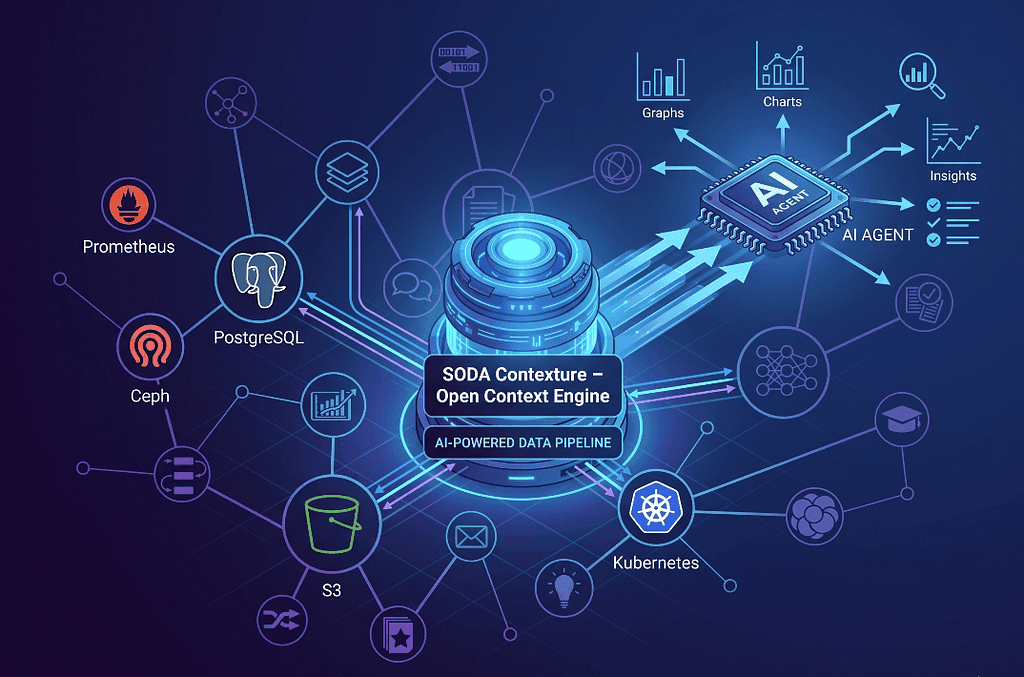
CNAI stands for Cloud Native Artificial Intelligence - the approaches and patterns for building and deploying AI applications and workloads using the principles of cloud native: containers, Kubernetes orchestration, declarative configuration, and scalable, self-healing infrastructure.
Two of the most consequential movements in modern software grew up in parallel and then collided. Cloud native rewrote how we deploy and operate software - containers, Kubernetes, declarative infrastructure. AI/ML rewrote what software can do. CNAI is what happens where they meet: running AI workloads the cloud-native way, so that models get the same scalability, portability, and operational discipline that transformed the rest of infrastructure.
Why CNAI exists
Running AI in production is, underneath the model, an infrastructure problem. You need to schedule GPU workloads, scale inference services under load, orchestrate training jobs, manage model versions and rollouts, and do it all reliably. These are precisely the problems the cloud-native world already solved for stateless services - so rather than invent a parallel operational stack for AI, CNAI applies the mature one.
Kubernetes, in other words, has quietly become the operating system for AI. The container that packages your model, the orchestrator that schedules it across GPUs, the declarative config that versions its deployment, the autoscaler that handles a traffic spike - these are cloud-native primitives, now doing AI's heavy lifting.
The CNCF working group
CNAI is not just a concept; it is an organized effort. The CNAI working group sits under the CNCF's TAG Runtime and coordinates how AI and ML integrate with cloud-native technologies. Its work has moved fast:
- March 2024 - the foundational Cloud Native AI whitepaper, defining the landscape and its challenges.
- May 2025 - a Cloud Native AI Security whitepaper, addressing the distinct risks of running AI on shared infrastructure.
- November 2025 - the Certified Kubernetes AI Conformance Program launches, standardizing what it means for a Kubernetes platform to be "AI-ready."
- March 2026 - the conformance program nearly doubles its certified platforms and adds agentic-workflow validation.
That trajectory - from a definitional whitepaper to a formal conformance program in under two years - tells you how quickly the cloud-native world has moved to make itself the standard substrate for AI.
The layers, briefly
A CNAI system stacks cleanly:
- Infrastructure - Kubernetes, GPUs, networking, storage: the cloud-native ground.
- Data - the streaming, orchestration, and compute layer (often Kafka, Airflow, and Spark) that feeds training and inference.
- Serving - the inference layer, where engines like vLLM run the models efficiently.
- Agentic - the newest layer, where frameworks like kagent run AI agents as first-class Kubernetes objects, governed by the same tooling as everything else.
Go deeper: the CNAI series
This post is the definition and the map. Each layer and theme has a dedicated deep-dive:
- How Kubernetes Quietly Became the Operating System for AI - the origin story of CNAI, in five acts.
- Cloud Native AI in Production - the layered reference architecture and three named production patterns.
- Agentic CNAI at Scale - the agentic stack, kagent CRDs, and containing dangerous tools.
- AI-Ready Kubernetes: The Conformance Program - what CNCF's AI Conformance actually demands of a platform.
Why it matters
CNAI is the intersection most serious AI infrastructure now operates in: AI/ML workloads running on Kubernetes and cloud-native infrastructure. Understanding it is understanding the substrate underneath modern AI - not the models, but the operational reality of getting them to run, scale, and stay reliable in production. That substrate is increasingly standardized, increasingly conformant, and increasingly the thing that separates an AI demo from an AI system.
Further reading
- Cloud Native AI whitepaper (CNCF TAG Runtime, March 2024)
- CNAI working group - how to engage
- Certified Kubernetes AI Conformance Program (November 2025)
- The platform under the model: how cloud native powers AI engineering in production (CNCF, March 2026)