WOSS is Welzin's open source society: plain-English learning, guided first contributions, meetups and talks, and a 30-day residency at our Mohali office where you build beside the team that runs open source in production.
Come work from the Welzin office in Mohali for thirty days. You contribute to real open source projects, collaborate with the engineers who run them in production, and work toward merged contributions under your name.
Contribute
Real issues on real projects - your pull requests, reviewed in the open, merged upstream.
Collaborate
Pair with the team on the same DevOps, MLOps, and AIOps work we run for clients.
Belong
Standups, whiteboards, chai runs - a month inside a working engineering culture.
Free and selective - we review every application.
Rolling admissions - apply anytime; we schedule you when a seat opens.
Bring a laptop and curiosity; we provide the desk, the mentors, and the work.
Best entered after the 15-day Welzin Bootcamp - finish it first and your application jumps the queue.
Some residents go home with a merged PR. Some don't leave at all.
The foundations WOSS organizes under - Linux Foundation, CNCF, Apache - and the projects we ship code to. Read the stack top-down, open it as a map, search it, or filter by how deeply we engage.
WOSS's pillars map to the real governance hierarchy, read top-down: the language agents speak, the engine room serving the models, the playbook AI runs by, the retrieval underneath RAG, the data plane feeding the models, the guardrails around every repo, the storage floor beside them, and the ground it all runs on - resting on the bedrock that hosts everything. The ASF rail feeds data in from the side. kagent is the keystone: it runs on CNCF, embodies CNAI, and speaks AAIF's MCP.
The language
AAIF
how agents behave and talk
The playbook
CNAI
how AI runs on cloud native (patterns · whitepapers)
The engine room
PyTorch Foundation
the models it serves
The retrieval
OpenSearch Foundation
the context it retrieves
The data plane
LF AI & Data
the features, vectors, lineage and model portability under the models (Feast · Milvus · OpenLineage · ONNX · Flyte)
The guardrails
OpenSSF
the supply-chain practices wrapping every WOSS repo
The storage floor
SODA Foundation
data & storage management - and agent context (Contexture)
The ground
CNCF
the infrastructure it runs on (Kubernetes · Prometheus · OpenTelemetry · kagent)
The bedrock
Linux Foundation
the neutral home that hosts them all (LFX · certs · events)
Second root
ASF · the data layer
The Apache pipeline that feeds every layer above: streaming ingestion, orchestrated DAGs, distributed feature engineering, and the open table and interchange formats underneath them - the stage before training and inference.
→
→
→
→
→
Each Apache project is governed by its own PMC under 'the Apache Way'. Our on-ramp guidance: go deep on ONE project - docs, connectors, or a well-scoped bug.
Radisson, ChandigarhCloud Native Chandigarh (CNCG) with the Agentic AI Foundation (AAIF)
A full agenda on running agents as first-class Kubernetes workloads: sandboxing, scheduling, gateways and regression-testing prompts the way you would test code.
Attendees
500sold out
Sessions
8
AAIF in Action: Live Demo of MCP, AGENTS.md and Goose for Cloud-Native Agent PlatformsOurs
Aman Mundra · Welzin
Introduction to Agentgateway on Kubernetes
Sandboxing AI Agents on Kubernetes: Meet the Agent Sandbox Project
Show all 8 sessionsShow fewer
Inside Kueue: Powering AI/ML Workloads on Kubernetes and Engineering Faster CI
Trust No Agent: Sandboxing AI with Docker sbx
Did My Prompt Break Production? Golden Dataset LLM Regression Testing on Kubernetes with Argo
Deploying AI Agents Like Pods
Breaking RAG Apart: A Microservices Blueprint for Retrieval at Scale on Kubernetes
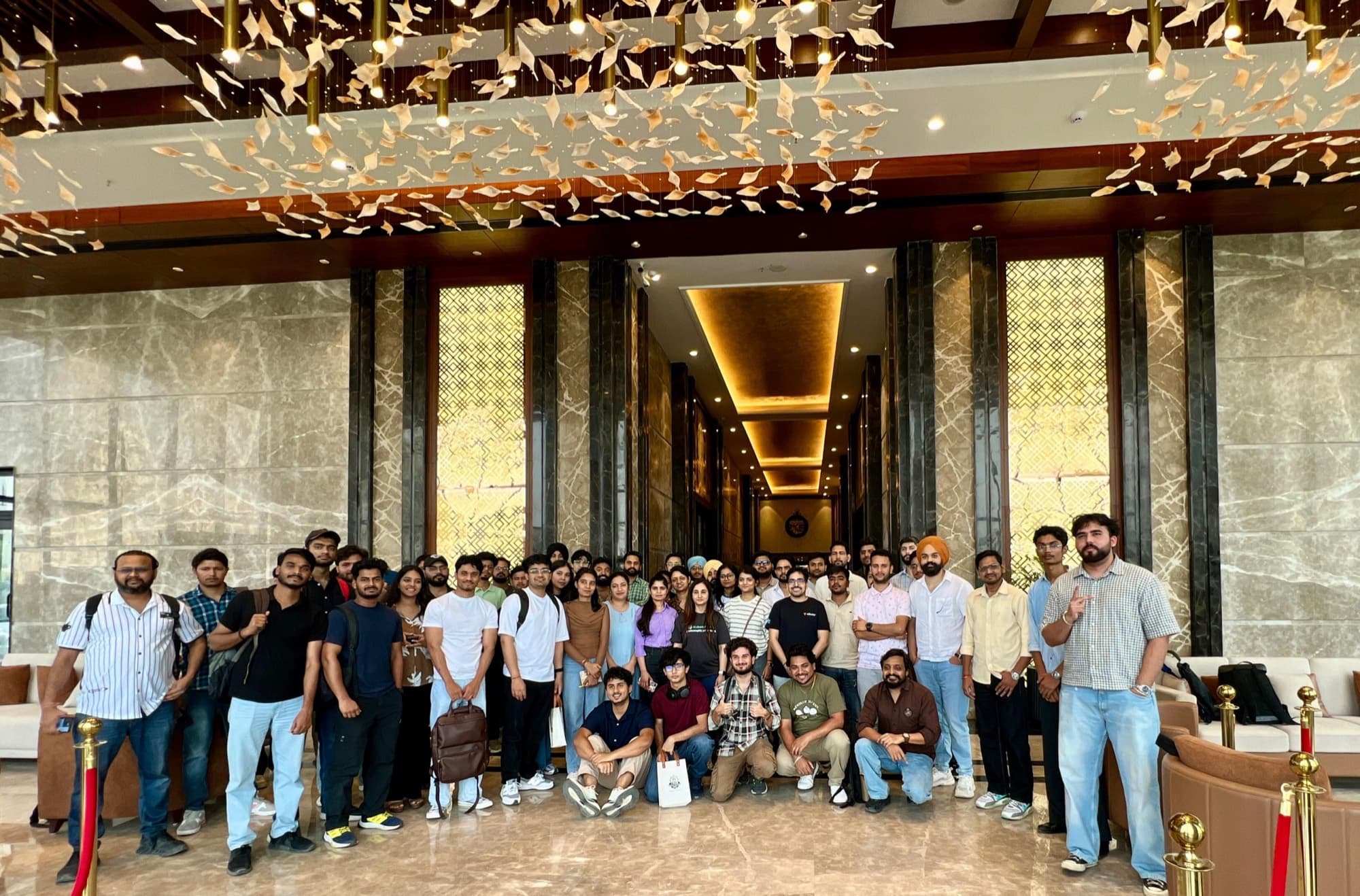
A full day in our own office: thirteen sessions from containers-as-Linux-processes up to GenAI serving platforms, plus the supply-chain and platform-engineering work that holds it together.
Attendees
500sold out
Sessions
11
Containers Are Just Linux Processes - Let's Prove It Live
Nikhil Kumar · DevOps & Platform Engineer
Dead Container Walking: Post-Incident Analysis When Your Workload Is Already Gone
Saurabh Mishra · Lead Consultant
Help! My LLM is a Resource Hog: How We Tamed Inference with Kubernetes
Hrittik Roy and Rajani Ekunde · CNCF Ambassador · Senior SRE, Docker Captain
Show all 11 sessionsShow fewer
Kubernetes Network Policies Done Right: From Native Policies to Cilium
Yuvraj Verma and Sourabh Mittal · Zscaler
Talking with Kubernetes API in Go: A Deep Dive into client-go
Nitish Kumar · Argo CD Maintainer
GitOps Meets GenAI: When ArgoCD Starts Managing LLM Pipelines
Ravindra Verma · Cloudynamics
Platform Engineering for Kubernetes: Guardrails That Keep Teams Fast
Rajan Sharma · Sr. Principal Architect
OpenClaw on DGX Spark
Saiyam Pathak
Learnings from Building a GenAI Model Serving Platform
Dharmjit Singh · NeevCloud
OpsAI: Incident Investigation, Reimagined with AI Agents
Amit Kumar · Senior Platform and DevOps Engineer
Securing the Kubernetes Supply Chain
Daman Ghatoura · Airev
Backed byLoft Labs · SponsorKubesimplify · Media partner
Your API gateway can't see a single MCP tool call. agentgateway is the Rust proxy that puts policy, security and observability in front of agent traffic - and it just became AAIF's fourth project.
Governance is member-gated. Code isn't. Here's exactly where an individual engineer can land a first PR across all four Agentic AI Foundation projects - and the house rules each one will close your PR for breaking.
CNAI is the practice of running AI workloads the cloud-native way - on Kubernetes, declaratively, at scale. Here's the definition, the CNCF working group behind it, and where to go deeper.
Field notes are written by the community as much as by us. Pitch us a draft - a guide, an explainer, a war story from production - and we'll edit it with you and publish it under your name.
Everything people ask before joining, answered without the sales gloss.
I've never used Linux or git. Is this for me?
Yes - that is exactly who the learn track is for. Step one of the pathway assumes nothing beyond curiosity and a laptop. If you can install an app, you can install a VM, and we take it from there in plain English.
How much time does it take?
A couple of hours a week moves you forward. The pathway is self-paced: some people go install-to-first-PR in a month, others take a season. There are no deadlines and nothing expires.
Is it free?
Yes, entirely. WOSS is how Welzin's engineers give back to the ecosystem their day job stands on. There is no paid tier and nothing to upsell.
Do I need to be in India or in a specific timezone?
No. Everything starts online and asynchronous - the writing, the issues, the reviews. Live sessions and in-person meetups will come as the community grows, and they will always have an async trail.
Join the society
Not ready for thirty days? Start with your inbox.
We’re at day zero. Founding members get the field notes first, first invites to events, and a real say in what this society becomes.