GenAI & Agents
How Context Length Optimization improves AI Performance
Aman Mundra · February 6, 2026 · 7 min read
Contents
- How Context Length Optimization Improves AI Performance
- Introduction
- Tech Stack & Tools Required
- So What is Context Length?
- The art of finding a sweet spot?
- Real world tricks that would actually work
- Hidden cost that nobody talks about
- The Rise of Context Engineering: Why Prompt Engineering is Just the Beginning
- The bottom line
- References
How Context Length Optimization Improves AI Performance
✍️ Author:
1. Nishit Rana
2. Aman Mundra
Table of contents
1.Introduction
2.Tech Stack & Tools Required
3.What is context Length
4.Real-world tricks that would help
5.Hidden cost that nobody talks about
6.The Rise of Context Engineering
7.The Bottom Line
Introduction
Imagine explaining your complex project to a friend; instead of dumping all 200 pages of documentation to him, you give a little bit of background about what you are talking about and what the main goal of the project is.
AI models face the same challenge. And if you’re building products with AI, understanding this balance could make or break your user experience and your budget.
Before jumping into context length and tokens, let’s get a short overview of some basic knowledge about AI and its associated terms
- Large Language Model(LLM) - It’s a type of AI model that is trained extensively on a large dataset, allowing it to understand and process the structure of a language
- Neural Networks - Neural networks are a computational model that works similarly to a human brain.A neural network consists of three layers input , output and hidden layers.
- Input layer - it is a first layer in a neural network where data is fed to the neural network.
- Hidden layer - A neural network can contain one or more hidden layers, each layer having a node that takes the input of the data from the previous node and performs mathematical calculations on it.
- Output layer - Main function of the output layer is to output the data which is processed by the hidden layer
- Attention Mechanism - It’s a key mechanism used in modern ai models which determine the important context regarding the input data to generate a proper response regarding the topic.
Tech Stack & Tools Required
For the experiments and concepts discussed in this article, here’s what you’ll need:
- AI Platform: OpenAI API (GPT-3.5/GPT-4) or Anthropic Claude
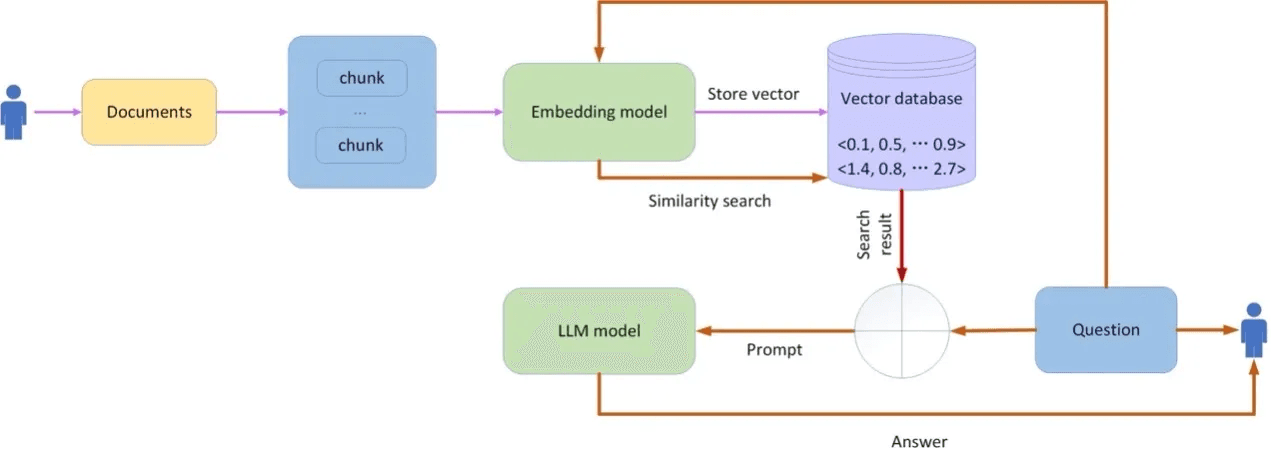
- RAG Orchestrating Framework: n8n
- Programming Language: Python 3.8+
- Libraries/Modules: tiktoken (for token counting), numpy, pandas
- Vector DBs: Pinecone or Weaviate for vector storage
- Monitoring: Token usage tracking tools
Having familiarity with API calls, basic prompt engineering, and token concepts will help you follow along with the practical examples.
So What is Context Length?
Context length which is also known as context window is the amount of information you give to the ai model. Lets dive deeper into this and explore what it really means and how it actually works. Whenever we send some text to ai models it is broken down into tokens. Think of them as a building block of the model. Each token requires a computational cost and the model has to track the relationship between every token. Here comes an interesting part: computational cost doesn’t increase linearly , it explodes.
Some might think feeding more context is better , as AI will have a lot of data to work on but that isn’t the case. Last summer I was working on RAG agents in n8n so I build up a simple agent and thought I could feed all the research papers to get a better answer but I was wrong. The model became inefficient and output was also not up to the mark as it was missing a lot of information. So it turns out context windows are like human attention span, so the less we know is better.
Actually what was happening I thought doubling context length might double the work for ai but I might get better result but in reality work was quadrupling or even worse. Lets take an example of 1000 tokens. The model needs to make an attention score between each token, so it means it needs to manage 1 million potential relationships out of which most of the relationships were useless. It’s like a waiter in a café remembering orders from all the tables but it’s solely serving one table.
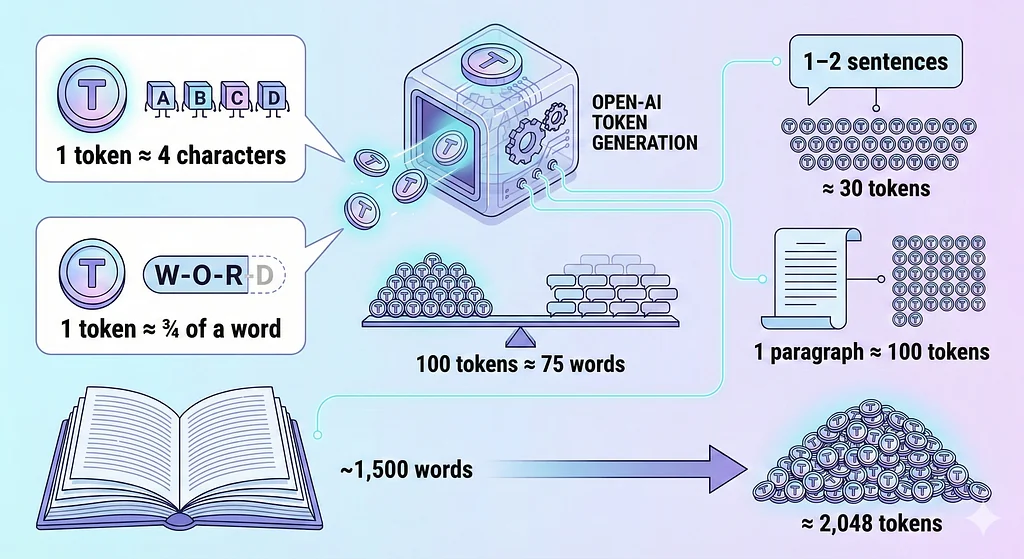
For context let’s talk about open-ai token generation:
1 token ≈ 4 characters
1 token ≈ ¾ of a word
100 tokens ≈ 75 words
1–2 sentences ≈ 30 tokens
1 paragraph ≈ 100 tokens
~1,500 words ≈ 2,048 tokens
The art of finding a sweet spot?
You might think how can we find the sweet spot of context length of we can get better results.Here’s what have I found out
· For conversational style : Short context is preferred, think about 2000 to 4000 tokens.This might help the model output to be snappy and stick to the main conversation.I have seen some chat bots improve dramatically when we shorten their context length
· For document Analysis: It’s a tricky part , we have to give enough context to capture meaningful patterns, but not so much that the bot drowns in details. Sweet spot here tends to be 8000 to 16000 tokens depending on the complexity of document.Going beyond this you are just adding more noise
· For Coding: It sits between the middle , you have to provide enough context so it can understand the broader architecture, but too much historical data might confuse the model.It might start picking up older patterns and conflicting parts for the codebase
Real world tricks that would actually work
Dynamic Context length: Instead of giving fix context length, adjust it based on task in hand. Start with smaller window in starting for initial processing then expand it only when you need referencing to a specific information.Its like zooming in and out of a google map you don’t always need to see the full continent to find out your local barber shop.
Text Compression: Before feeding the whole context to the model try to make it smaller by extracting the important parts and ignore the irrelevant things. This really can reduce the token of usage of the model by 70 percent.
At last a well structured data is more beneficial then adding content.Breaking your input into various heading with consistent format and highlighting the important things can improve the output of your LLM model drastically.
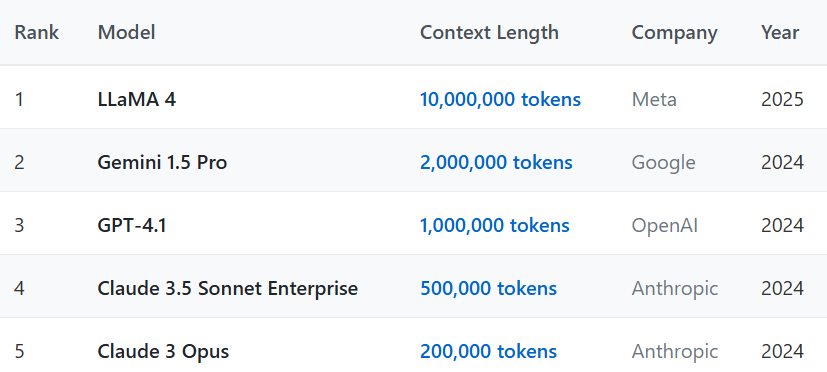
AIs really are dumb; they have a very short memory and forget what you have said last time. So they basically remember the important part regarding the context and keep a lighter emphasis on distant one, that’s why they have a bigger context length.
Hidden cost that nobody talks about
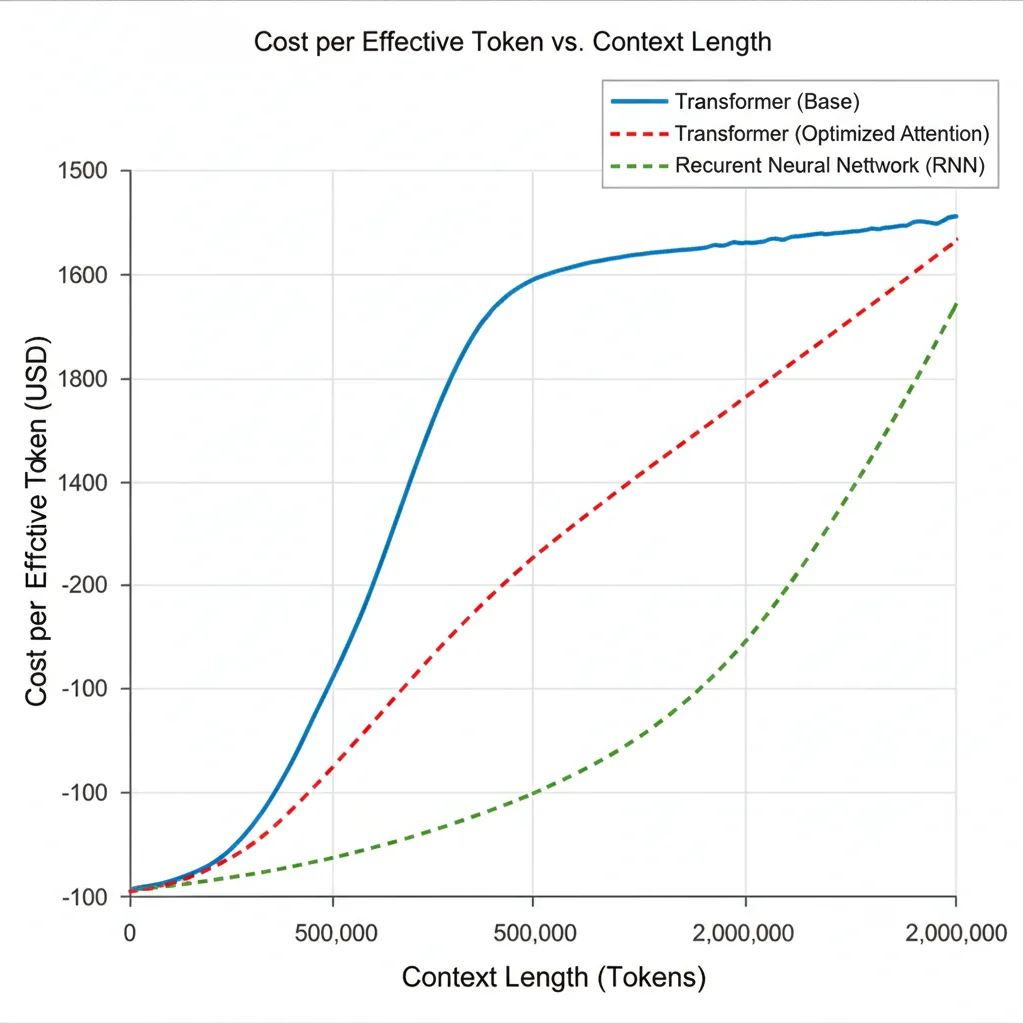
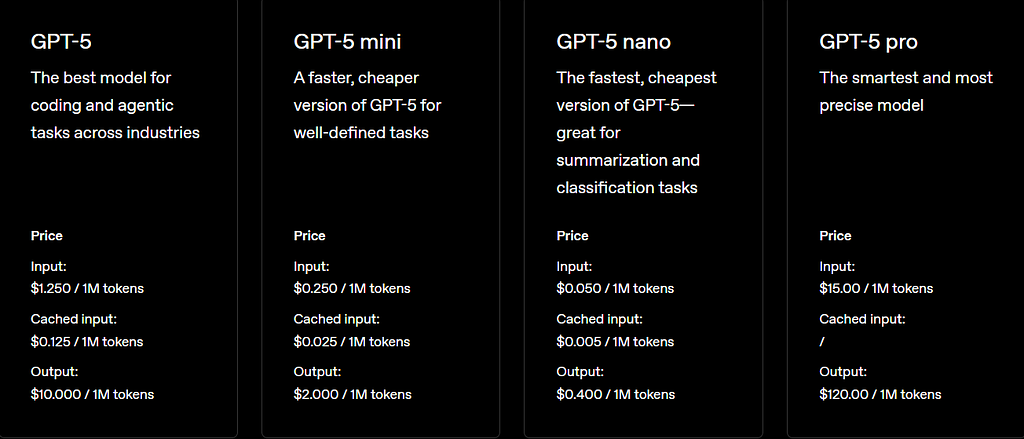
Most api pricing is based on token processing. Longer context not only affects the performance but also hits the wallet too. I have seen bigger companies burning hell a lot of money because they didn’t adjust their context so they have to pay a lot due to the large size of their tokens which require computational power.
Longer Context not only affect financially but also hinders production.A longer context take a lot of time to process so the user or the customer have to wait more to get the results which can adversely affect the company itself.But in case of shorter context the things are different as there is low latency because of less processing and can improve the performance.Shaving even 20% of your context length can make difference between a smooth user experience and a frustrated user.
The Rise of Context Engineering: Why Prompt Engineering is Just the Beginning
This field is developing fast. Many new architectures are emerging that can handle longer contexts more efficiently. Techniques like sparse attention and hierarchical processing are showing great result.But I think the future isn’t about having an infinitely long context, it’s about smarter context.
We have seen many new AI models which can dynamically decide which information to remember and what to forget like a human memory. They will compress the data only keeping things that seem to be important.Think of it as remembering a whole conversation versus remembering the key points and emotional tone.
The bottom line
Context optimization isn’t very popular and you might hardly hear it in headlines with the release of new models.But it’s the difference between an AI system that works in theory and the one which works in reality.
Start by measuring your context length.You might be surprised how much unnecessary information you were feeding to the model.Experminent with different context length with different tasks. Not only track accuracy but also speed and cost it takes to deliver the results.
The goal isn’t to use the maximum context length available. It is about the right amount of context length needed to deliver the job and when you find it it’s the real sweet spot , after this everything clicks in place .
References
Originally published on the Welzin Medium.